
Last weekend, I raced in the ChampCar 12-hour event at Sebring in a Porsche Boxster. Throughout the event, and since, I’ve thought a lot about the state of amateur racing in North America, and specifically the impact that “budget endurance racing” has had on our sport. A little background (in case you need a history lesson!):
Since the mid-to-late 1940s, amateur road racing in the U.S. belonged to the Sports Car Club of America, with pretty much all of it being sprint racing. For decades, the SCCA had a reputation of making entry into racing a challenge, almost as if it were meant to show that one could prove their worth by jumping through and over every hoop and hurdle. In an attempt to make amateur racing more accessible, in 1991 the National Auto Sport Association (NASA) was launched, but it initially followed the SCCA’s sprint racing format.
Then, in 2006 Jay Lamm created LeMons, the first “budget endurance racing” series, with the philosophy of making racing accessible, fun, and affordable. It worked, as it attracted thousands of drivers who would most likely have never gone wheel-to-wheel racing.
From there, the ChumpCar World Series was launched in 2009 (and then rebranded as ChampCar Endurance Series in 2020), American Endurance Racing (AER) came along in 2013, World Racing League (WRL) in 2014, and Lucky Dog Racing in 2015 (plus a few smaller, more regional organizations).
Recognizing the strong interest in endurance racing, NASA has followed with their own long-race events a few years ago, in addition to their usual sprint racing formats, and HPDE events.
It’s estimated that there are now more drivers competing in these multi-driver/team endurance races than in all of SCCA and NASA sprint events put together. In general, in my experience (I must admit that I’ve never even attended a LeMons race, but I’ve competed in every other series), the racing is good, it’s easier on an individual’s budget, and it has fewer hurdles to entry for drivers. Add in the camaraderie of a team event, and these series continue to grow.
The first ChumpCar race I drove in was at Road Atlanta around 2015. My thoughts at the time were, “Wow, there are drivers here who have never been on a race track in their lives, and many of the cars look as though they had been pulled out of the local wrecking yard.” A few years later, I raced in WRL, and it was a blast. Over the next ten years, I did many individual AER, Lucky Dog, and WRL races, and watched with interest as each series “grew up.” Then, three years ago I drove in a ChampCar race again, and was blown away by how the series, drivers, and cars had changed since that lone Road Atlanta race many years ago—all in a positive way. It was like ChampCar had become the WRL circa 2019; WRL had become like “IMSA Lite,” with very big budgets needed to race for overall wins (and possibly losing some of the fun atmosphere?).
Okay, that’s end of our history lesson for today. Class dismissed (but stick around for more thoughts about the race event I just competed in).
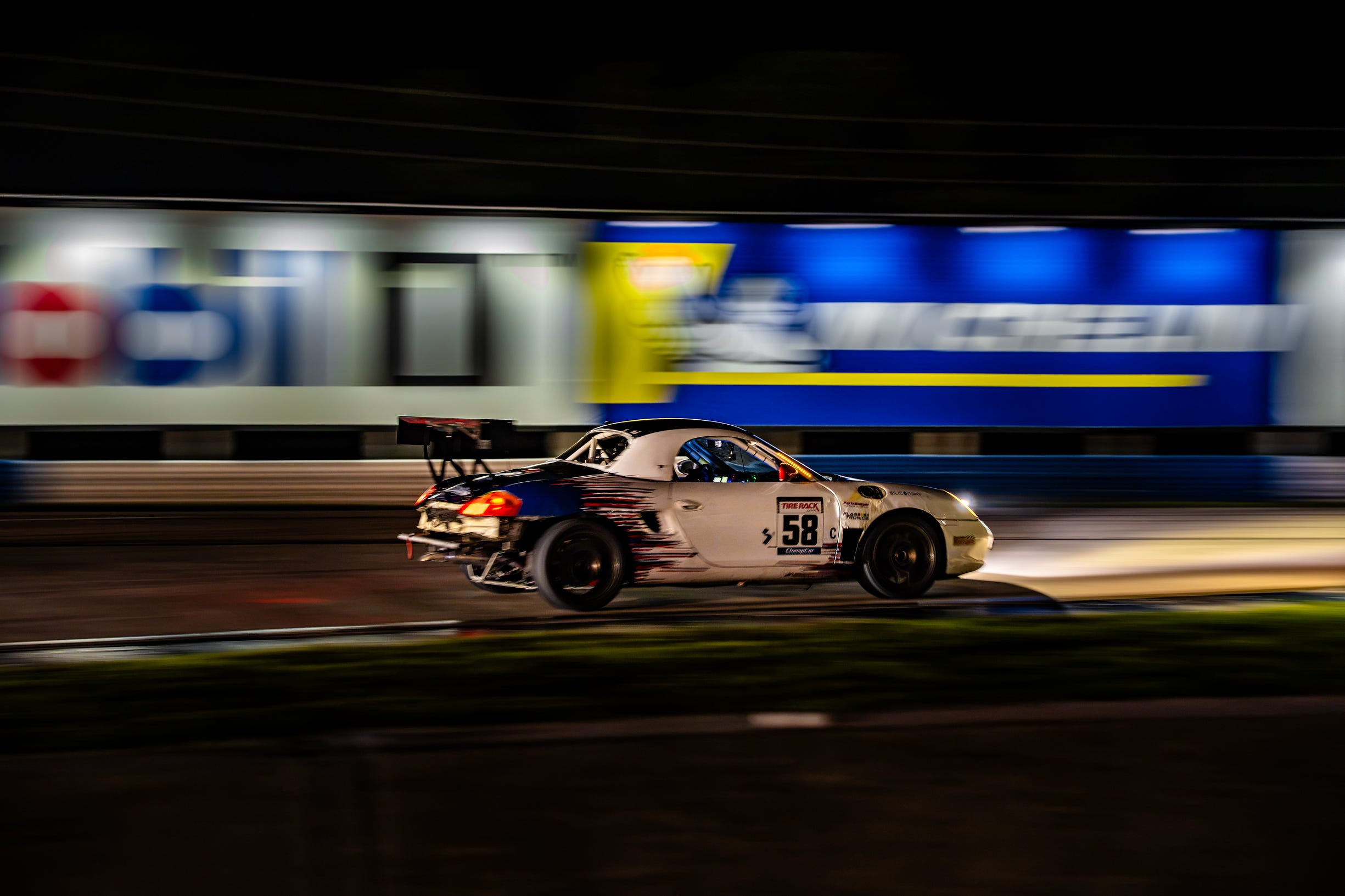
The Sebring ChampCar race was interesting, as it was a 12-hour race starting at 6pm on Saturday evening, running until (you guessed it) 6am on Sunday. I love racing at night, and Sebring is the perfect track for endurance racing. While we had a couple of car issues, the racing was hugely fun. Other than a few drivers in cars that were fast on the straights who felt they needed to block faster cars in the corners (more about that below), the overall quality of driving was fantastic. In twelve hours of racing, there were very few incidents (which is not something I could say about some other series).
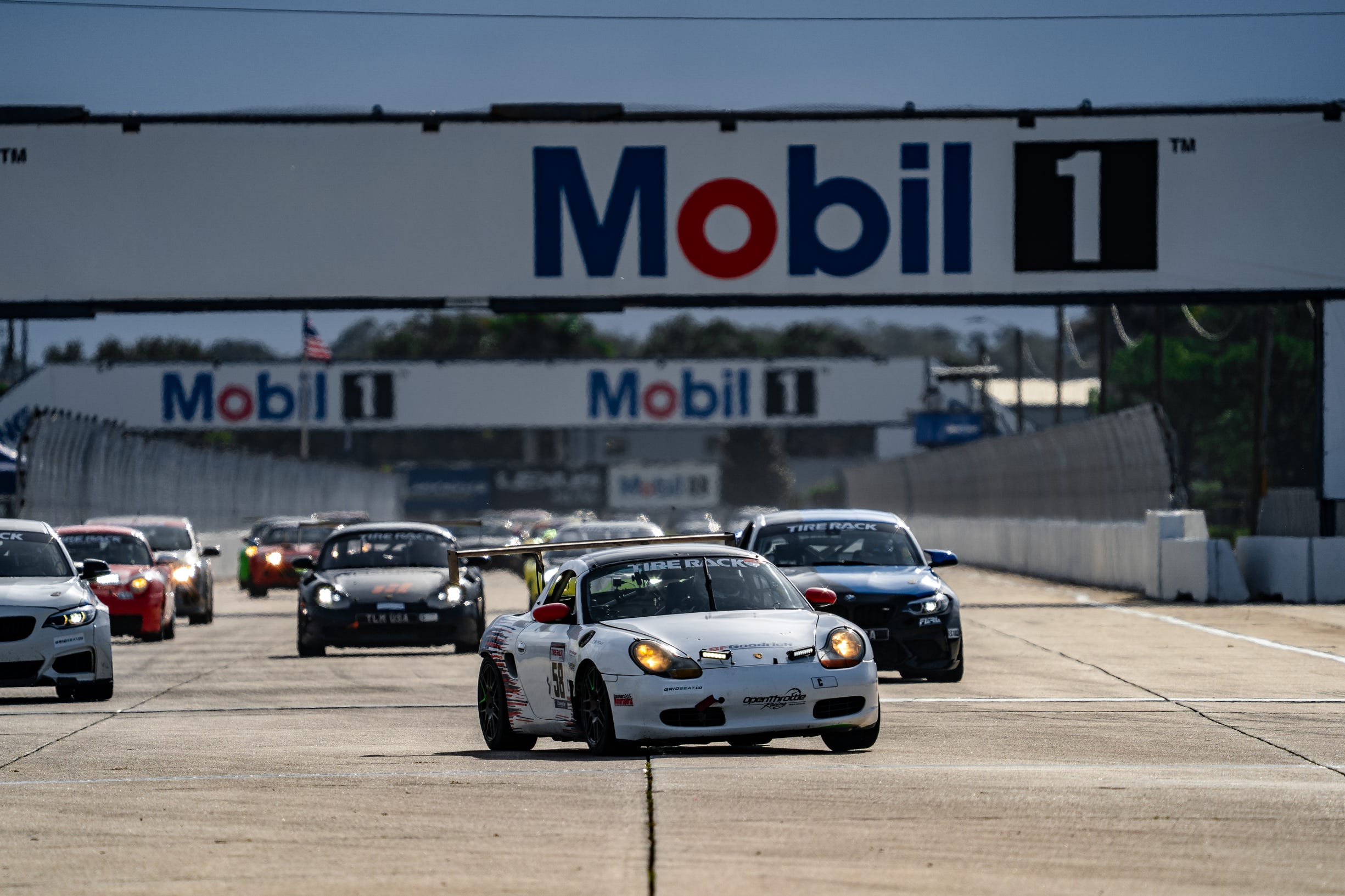
I love endurance racing for the strategic thinking it requires when working traffic. If anyone reading this has only done sprint racing, you really owe it to yourself to do some long races. It’ll make you better in short races, and the teamwork can really be fun.
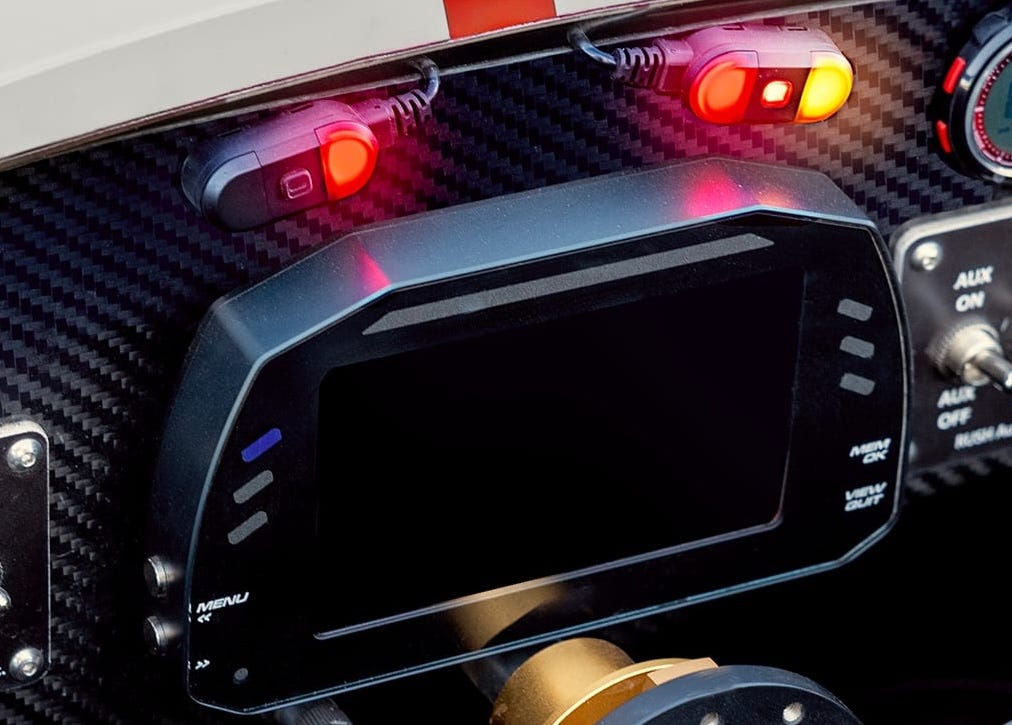
One of the things that made the racecraft so good at Sebring is that we had installed the recently-launched Garmin Catalyst R1 radar device. It works just like the high-end systems that the top, pro GT race cars use, with two lights on the dash within your peripheral vision that tell you when there is a car behind you, gaining on you, and then when they move to either side. Think of it as the lane departure warning lights in the side mirrors of modern cars—only on steroids—and it also helps the driver be aware of cars directly behind. I will say that since this was the first time I had used it, it took a bit of time to calibrate myself to it. Hey, I’m an old-timer(!), so I will still use my mirrors, but there were many times when having the R1 confirm what I thought I knew was very comforting. And there were many times when I wished drivers in other cars had the system because I had to question whether they saw me at all when I was passing them. With any luck, there will be a time in the near future when every race car has the Catalyst R1 (or a similar system), as it will make wheel-to-wheel racing even safer.
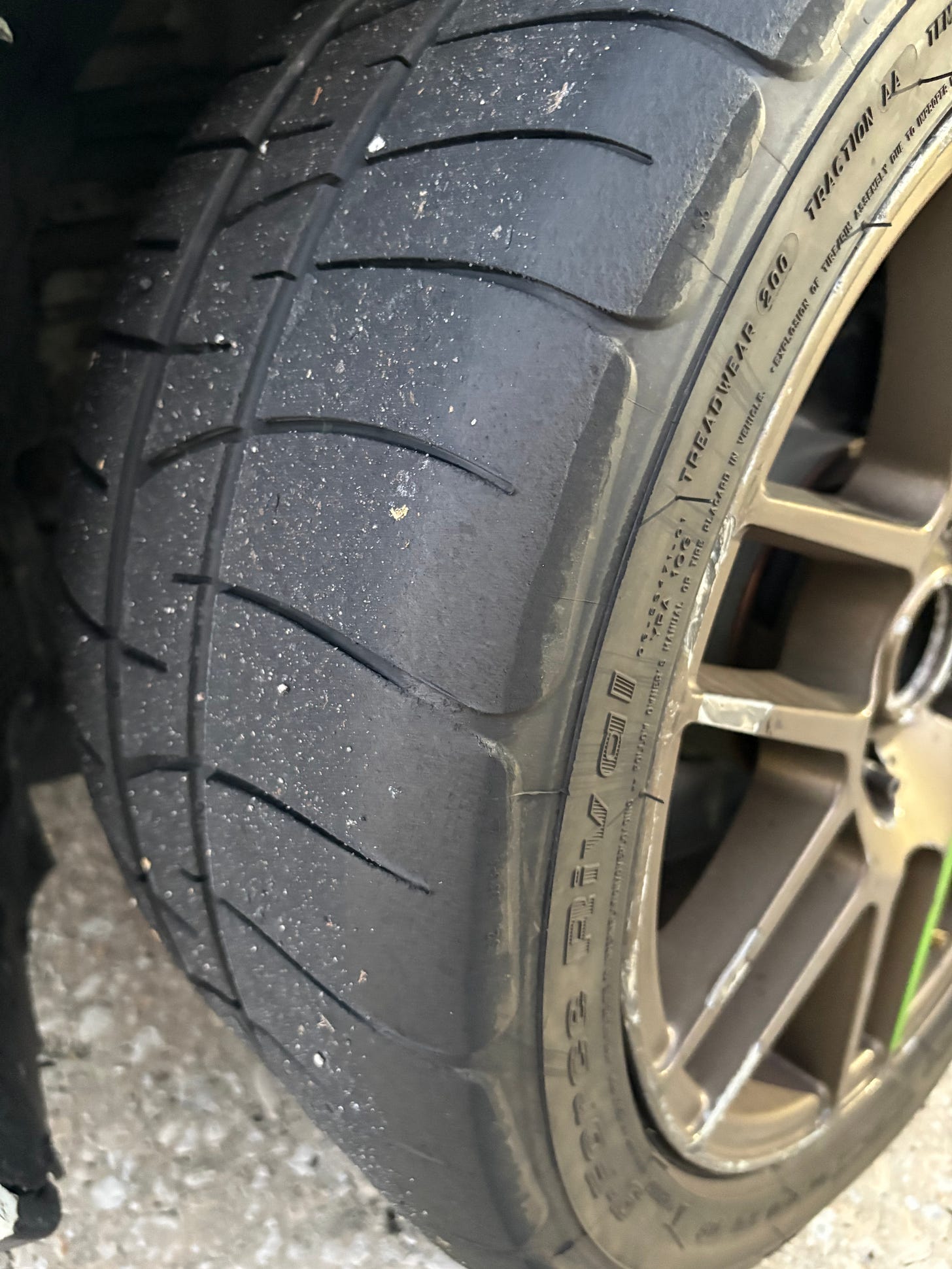
Speaking of “tools” to make racing better, we ran BFGoodrich Rival + tires on our car. When I got in the car for my second stint at 4am to drive the final two hours of the race, I had expected some grip to have left the tires after ten hours of abuse on one of the toughest tracks in the world (ambient temperature never got below 90 degrees F overnight; the huge bumps of Sebring have not gotten any smaller!), but that was not the case. They were just as grippy, fast, and forgiving as they were at the beginning of the race. Oh, how times have changed! There was a time, in endurance races, when I’d be hanging on for dear life towards the end of a single stint, and we ran the same set for all twelve hours! In fact, looking at the Rivals after the race, I commented that they looked like they’d be good for at least one more 12-hour race. For “budget racing,” you can’t ask for anything more from your tires.
On a different note, I’m curious why some teams seem to go out of their way to make their cars “less-than-good-looking.” There were many cars that did look good, but a few, with just a bit of spray (bomb) paint and cleaning, could have looked so much better—which made me wonder. Is it meant to show how unserious and fun-loving they want to be? It’s okay if that’s it; I’m just curious….
One thing I notice every time I race in one of these endurance series events, at every level, is how many teams miss the easy, simple things that result in issues, and those hurt the results they achieve. And so often, these easy, simple things have practically no cost. At the most basic end, just cleaning the cars so things that can turn into big problems later are easy to spot is not something that all teams seem to focus on. And there seems to be a lack of checklists. There’s not a pro race team in the world that doesn’t use checklists to ensure things are not missed and properly prepared.
I’ve written this in the past, but here we go again: The main difference I see between pro and amateur race teams is how they deal with problems. If a pro team has to stay late to fix something with the car, they seem embarrassed by having to do so; many amateur teams brag about doing all-nighters. That’s a different attitude, and points to their approach to preparation.
Of all the endurance races I’ve competed in, what most often gets in the way of winning (or a good result) is not the car’s overall performance level. No, it’s the lack of paying attention to the details that results in a small problem often turning into a bigger problem. Most endurance races, especially at the “budget” end of things are not won by the fastest car. They’re won by the car and team that had the fewest problems; they stayed out of pit lane.
Paying attention to the details, having checklists to ensure that nothing is missed, preparing early, good communication amongst everyone on the team, and minimizing the mistakes (everyone will make mistakes; it’s minimizing them that matters) is what wins endurance races.
Of the 60-plus cars that started the race, there were three that stood out for me, and not for good reasons. These three were much faster than our Boxster on the straights, but were turning laps at least three to five seconds slower than we were. The drivers were aware of me catching them, but instead of easing off the throttle at the end of a straight to let me slip past them, they fought me for the corner. That would be okay if we were in the same class, or even if it was near the end of the race, but that wasn’t the case. So, by fighting me for a corner, they slowed themselves down (and me too, obviously). A slight breathe of the throttle near the end of the straight would have cost us a tenth or two, but fighting for the corner meant losing up to a second or so. My hope is that they learned at some point during the race to change how they dealt with faster cars. Or they’re reading this, and recognize themselves!
My last 2-hour stint in the Sebring race was one of the most fun I’ve had for quite some time. As I mentioned, we had had some issues, and had lost positions and laps to others because of that. Usually, when I’m driving, I like to know which cars I’m focused on either pulling away from, or catching. But I completely ignored that for my entire stint. All I focused on was driving the very best lap, followed by the next lap being even better, and the next being better, and so on. I didn’t care about the lap times, but used my Garmin Catalyst 2 to tell me whether a small tweak in my cornering line or technique helped or hurt. The immediate feedback from Cat2 was super-helpful, and I learned something every single lap, every single corner. Combining that with setting up and executing passes, thinking ahead, planning, adapting… for two hours straight I never thought about anything other than driving. Simply driving, striving to learn and improve. It was bliss! My only complaint came when they told me the checkered flag was out, and I asked the team if I could keep going for another hour. Those two hours seemed like 45 minutes.
Yeah, I still love driving! So much!
Still, there was a time for the coach to coach the coach! Turn 13, Tower Turn, at Sebring is a challenging one. There are at least three different surfaces, and maybe more than that number of mini-elevation and camber changes through what is essentially a 90-degree corner, with no definite brake references. Add in the fact that you approach it on an angle, aimed away from the apex of the corner, and it’s difficult to get the Turn-in, Apex angle, minimum speed, and a strong exit just right. Consistency can be a tough thing to manage. During my first stint I had to remind myself to turn my head and look into the apex very early—pretty much when I began braking—mentally focused on the EoB, being clear on what my brake release should feel like. The instant I focused on turning my head and looking towards the Apex early, I consistently gained at least a couple of tenths through this section of track (as confirmed by Cat2). How many times have I coached other drivers to do this? Even so, it took me maybe ten or so laps to remind myself to do this (proving, once again, that I’m not very smart!).
I’ve often said that the most important thing in any team situation is having great teammates. I guess that’s why they call it a team! I was fortunate to have two fast, consistent, smart co-drivers who happened to be wonderful people, as well. I had never met Sarah Robinson and Trent Harvey before showing up at Sebring, but I immediately knew that this was going to be a fun race with them, mostly because of one thing I noticed right away: no egos, a big focus on learning, and doing whatever was best for the team to do well. Okay, maybe that’s three things! So, if I had to encapsulate it into one thing, it would be their mindsets. Thank you, Sarah and Trent!
I’m looking forward to my next race.
P.S. – We finished 8th overall, and 6th in class.