
Over thirty years ago, I began studying, testing, teaching and practicing ways to get into the zone, or flow, while driving. Of course, this is not something exclusive to driving, as it comes and goes in every area of our lives.
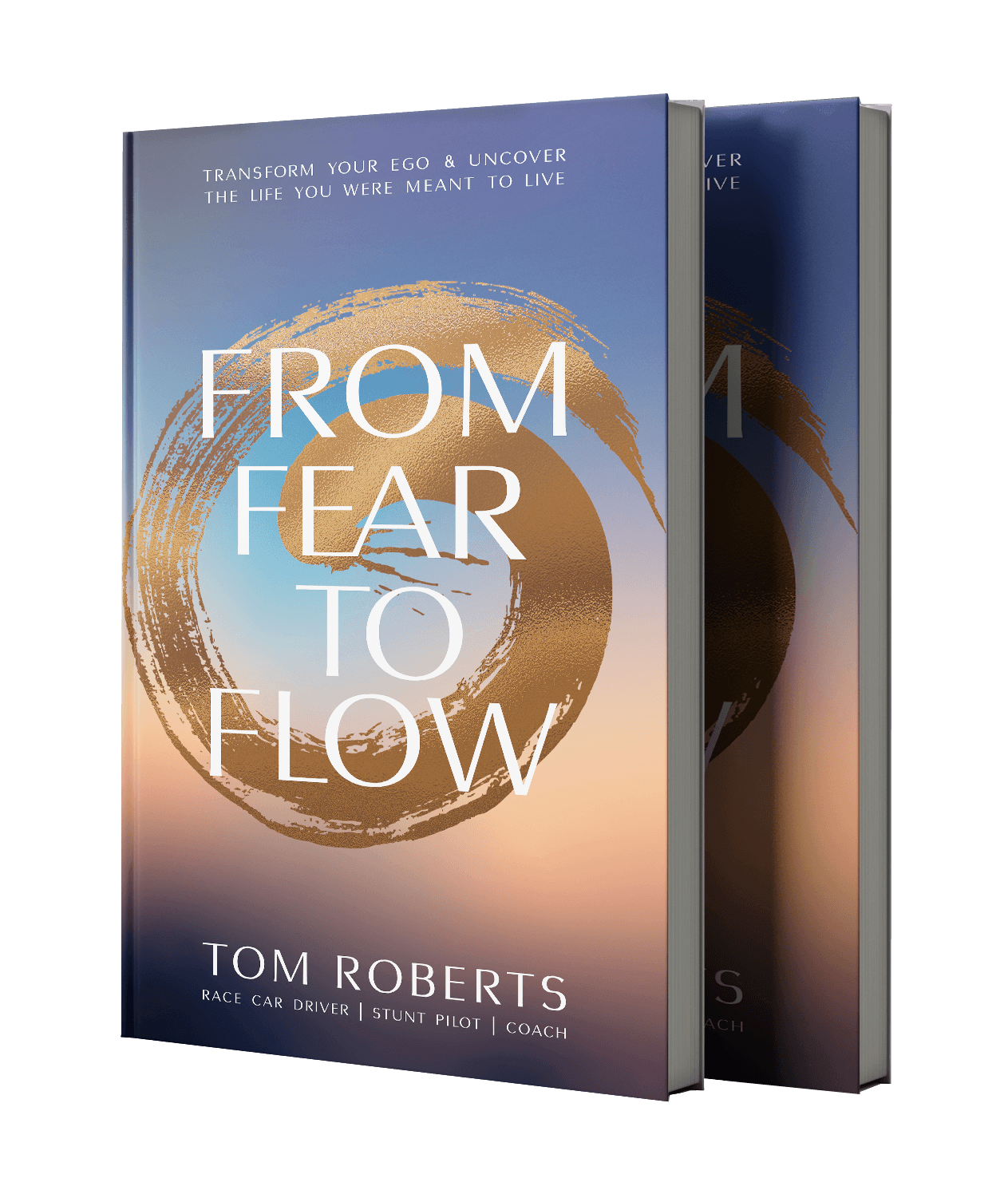
Today, I’m writing about what causes flow to go away, and specifically about a new book that I highly recommend.
I’ve conducted many workshops over the years, both in person and online (that I refer to as Inner Speed Secrets), with the goal of helping drivers perform better. After all, performance/race driving is very much a mental game.
Along the way, a driver named Tom Roberts attended one of these workshops. We got talking, and within a year or two we had partnered up with Ron Simons’ RSRNürburg to take drivers to the Nürburgring and Spa (the ultimate test of driving in flow?!). Over the next ten years we became good friends and have spent hours upon hours in deep conversation about this mental state in which we perform at our highest level.
We each have approached these conversations from our own personal perspectives. You know mine, but to give you a glimpse into where Tom was coming from, here’s a bit of what I wrote in the foreword to this book that he authored:
Of all of the things Tom and I have talked about, the most interesting is his insight that flow is natural: we were born in flow, and it’s what happens in life that gets in the way of getting back into that state.
I’ve always thought that there are two sides of performance: what you can do to improve it, and what you cannot do that hurts it. And that fits with the idea that Tom introduced to me.
Flow is natural. It’s not something we should be trying to get into, but instead, something we should stop ourselves from getting in the way of. We were born in flow, but through life experiences, we inhibit flow.
As proof of this, just watch a young child dancing, coloring, singing, or playing with model cars on a living room floor. They’re not thinking about what’s going to happen tomorrow, or the mistake they just made, or what someone it going to think of them. They’re in flow. Unfortunately, it’s what the collective “we” say to children (i.e., “Grow up!”) that results in many adults not feeling free enough to continue in flow more often in life.

Based on the title, From Fear to Flow, it’ll come as no surprise that fear is also addressed by Tom in his book. Fear of bodily damage, both personally and to one’s car. Fear of failure, embarrassment, and even fear of success. And most importantly, fear of stuff that doesn’t align with one’s ego. Does this apply to performance and race driving? Well, yeah. Duh….
I should mention that both Tom and I believe that flow, or “the zone,” is not a singular state, as it’s often referred to. It’s not an on-off switch, where you’re either in it, or you aren’t. No, it’s a spectrum, and you can be at different levels of flow.
Throughout the decades that I’ve been “playing” with flow, I’ve asked thousands of drivers how often they’ve been on this spectrum. The answers are from “never” to “always,” and everything in between. I have a hard time believing that someone could never have experienced being in the zone, and just as hard a time seeing how someone could be in flow every moment they’re driving (unless they’re 3-years-old, in which case maybe they shouldn’t be driving!). My opinion is that either some people expect more from flow than it delivers, or others set a low bar for peak performance.
My point is that flow really is a spectrum, and you can be at any point along it while driving.
Then, when I ask drivers to describe what being in the zone is like, and what they think has caused it, I’ve never had one tell me that they got into flow by trying really hard. Or by some trick. For many drivers, it often happens when they don’t do anything in particular. Sure, they may have some sort of ritual or routine or preparation just before they drove that seemed to help—and it does.
The harder you try to get into flow, the less likely that will occur. Most often, that’s like putting a road block between you and getting into the zone.
Which brings us back around to what Tom got me thinking about: It’s not what you do to get into flow that matters, it’s what you do that stops you from getting into flow.
Think about that. In fact, I’d love to hear from you about a time you realized that something had got in the way of you getting into flow. Click on the Comments button below and share your experience.
Do I recommend you read From Fear to Flow? Absolutely. Very much so. Will it change your life and the way you drive? Obviously, I can’t promise that, but who knows, it might do that!
You can pre-order and get a copy of From Fear to Flow on Amazon.